Grade 4 Project
To better understand our Clarke County watersheds, 4th graders are raising Virginia's state fish, the brook trout, from egg to juvenile before releasing them into a healthy trout habitat. But how can we figure out if a habitat meets the needs of our trout at each stage in their life cycle?
Driving Question
What stream habitat in the Clarke County watershed meets our brook trout’s life needs?
Virtual Watershed Investigation
Click on the links at the bottom of the page to explore five water habitats in Clarke County to figure out which trout life needs can be met at each location. Record your findings in the habitat assessment document.
Project Elements
Issue Investigation
In mathematics, students graph the life spans of trout and water temperature over time. In language arts, students explore and determine how to share our findings with the community. With science, students learn about trout habitats, life cycles, and diets. Students care for their young trout as eggs, alevin, and fry. In history/social science, students explore the importance of water resources throughout history and if Brook Trout are native to all of Virginia's physiographic regions.
Field Experiences
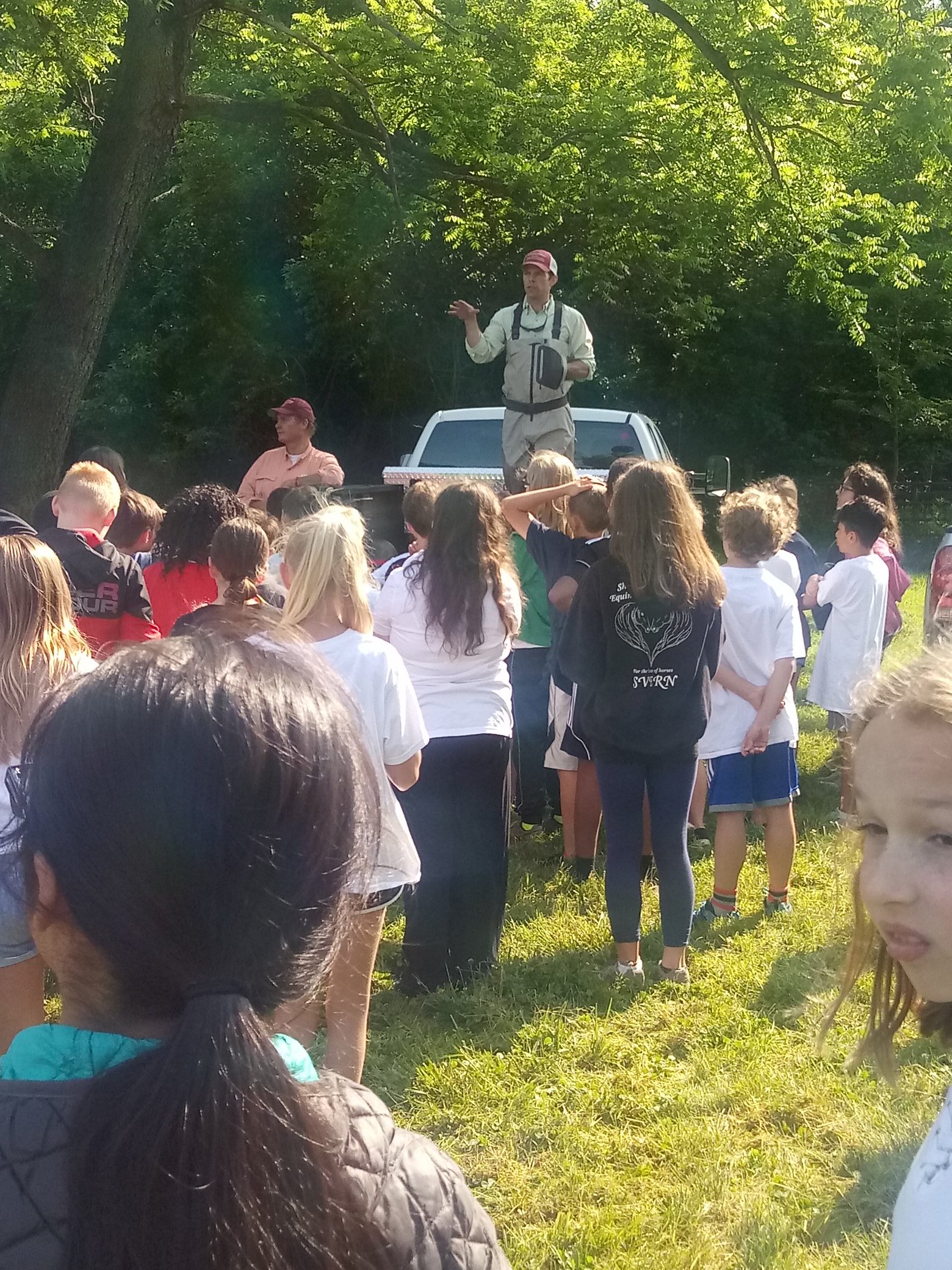
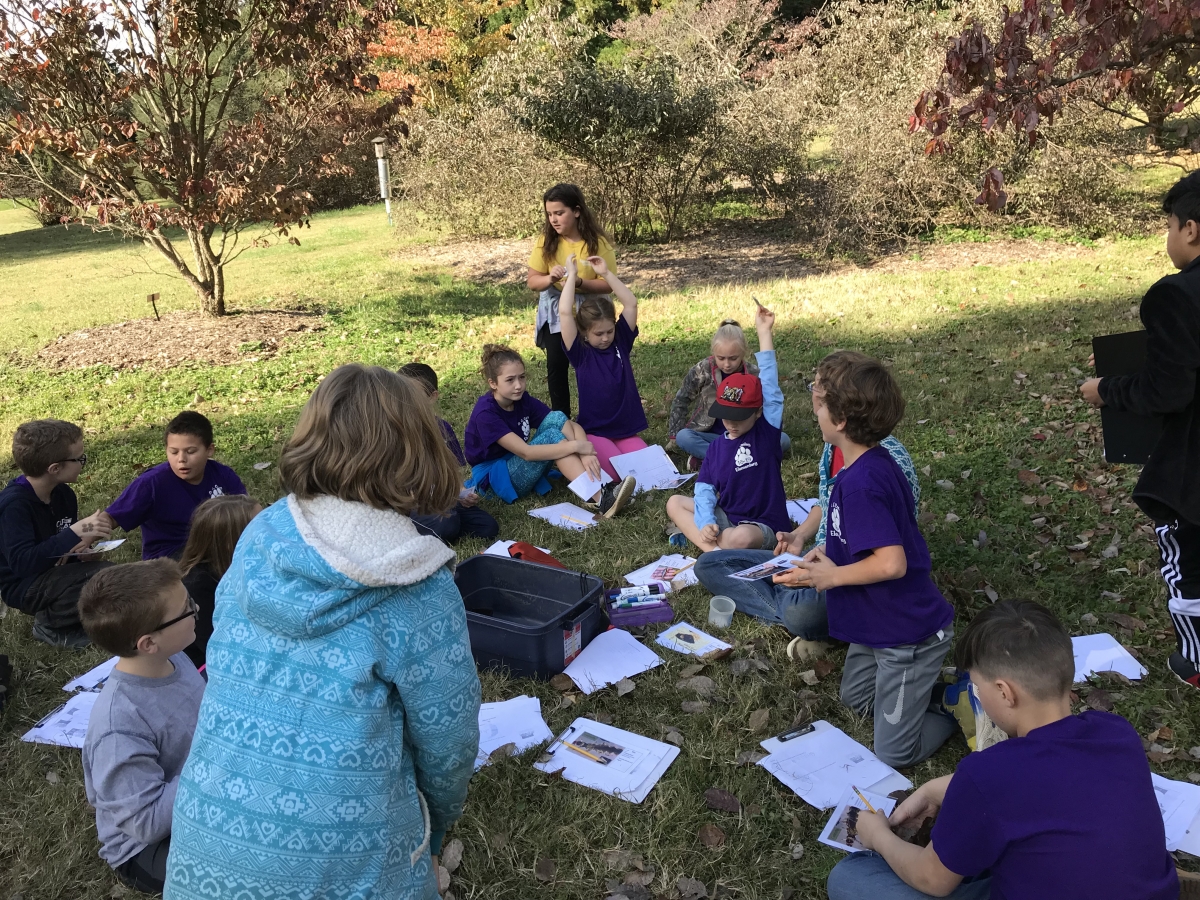
Students conduct hands-on investigations as they apply their new knowledge to understand trout life needs and potential issues with the survival of their trout.
Field Investigation Lesson Plans
Sediment Experiment Lesson Plan
Trout Survival Game Lesson Plan
Action Project
Students evaluate local waterways to assess suitability for the release of their trout. They share their findings with students in other grades, their families, and their community. The trout are released into a suitable local waterway.
Synthesis and Conclusion
Students study the life cycle of the brook trout, and learn the definition of a watershed, as well as what it means to have a healthy or unhealthy watershed. They demonstrate how pollution and erosion affect the trout. Students also promote preserving the Chesapeake Bay Watershed, asking parents to sign a pledge to keep the watershed healthy.
During the 2020-2021 school year, we adjusted many of our field investigations for remote learning. We created investigation kits that contained materials for students to carry out our hands-on investigations in their personal learning environments with virtual teaching. The contents of the investigation kits can be found in an investigation kits video.
Grade 4 Project Videos
Shenandoah River at the Route 50 Boat Ramp
Land Use and Habitat at Shenandoah River Video
Temperature (and how to measure) at Shenandoah River Video
Sediment (and how to measure) at Shenandoah River Video
Spout Run in Millwood
Land Use and Habitat at Spout Run Video
Temperature and Sediment at Spout Run Video
Page Brook at Powhatan School, Millwood
Land Use and Habitat at Page Brook Video
Temperature and Sediment at Page Brook Video
Roseville Run at Boyce Elementary School
Land Use and Habitat at Roseville Run Video
Temperature and Sediment at Roseville Run Video
Dog Run in Rose Hill Park, Berryville
This project was funded by a NOAA B-WET grant # NA18NMF4570315
Developing MWEE capacity through systemic, vertically aligned, integrated curricula, grades K-12