- Visit
- Things to Do
- Clubs
- Programs & Events Calendar
- Learn
- Arboretum
- Research
- Support
- About
- People

How does the health of our waters affect the wellbeing of specific habitats and ecosystems within the Chesapeake Bay Watershed? How are riparian buffers necessary for watershed health?
Students learned the qualities needed for specific species to thrive; brook trout, turtles, oysters, etc. They investigated direct links between contaminants and water sources. Aquatic food production systems were also explained. Soil systems, degradation, and conservation were also analyzed by students.
Students met with an officer from the Department of Wildlife Resources (DWR) to fully understand the issues facing our watershed. They also visited Clermont Farm where they performed soil testing.
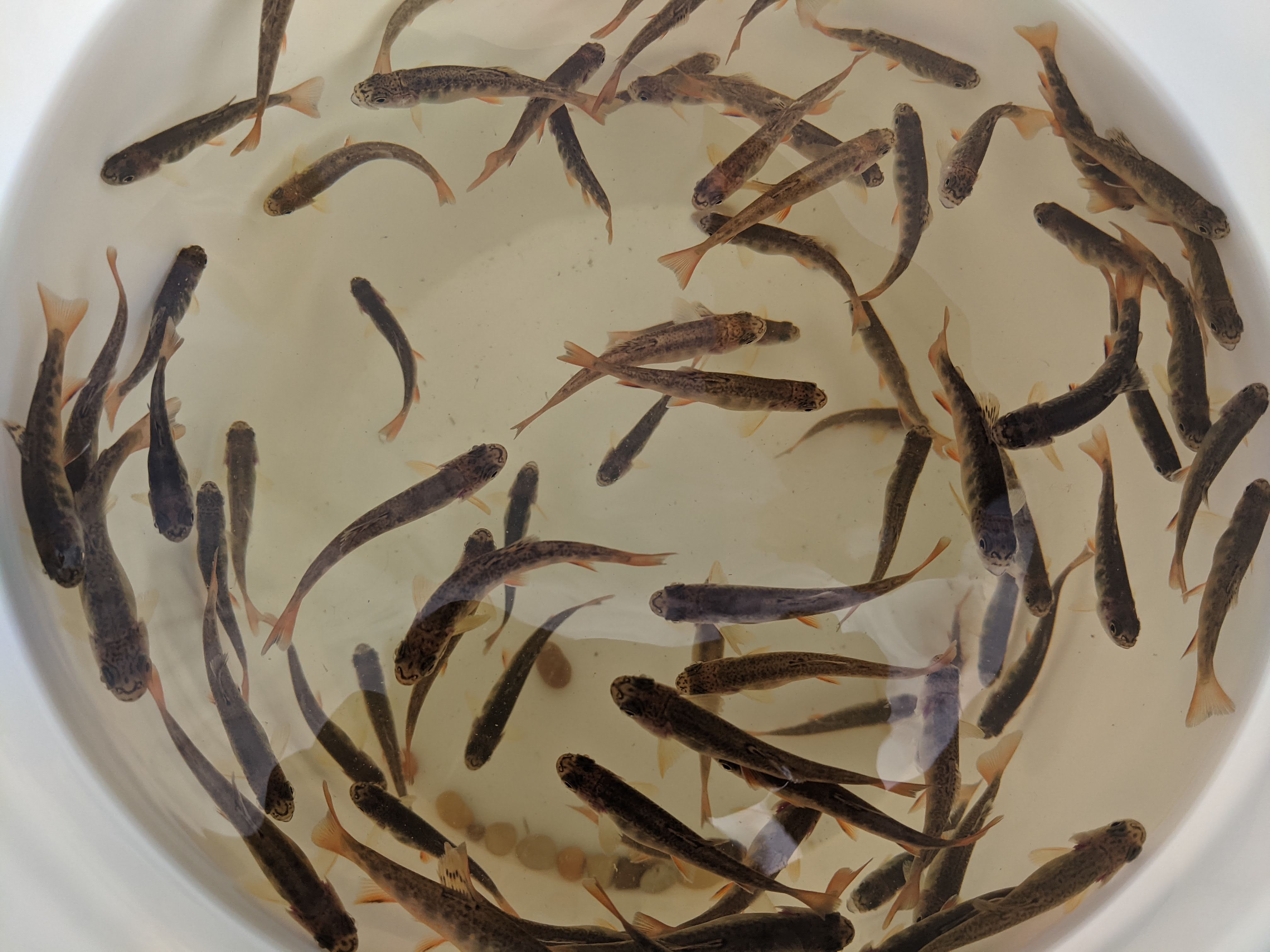
Through Trout in the Classroom, students raised trout which were then released into Spout Run. Additionally, students created action plans to prevent/curb pollution on a local farm. Finally, students grew plants that would become part of a riparian buffer to protect the Shenandoah River.
Visiting Clermont Farm and talking with the Virginia DWR officer, students realized that there are ways we can try to protect our waterways. From curbing pollution to stocking trout in our local stream, students can make a difference in keeping our waterways healthier.
Meaningful Watershed Educational Experiences - MWEE website
Trout Unlimited - Trout Unlimited website
Clermont Farm - Clermont Farm website
Virginia Department of Wildlife Resources - VDWR website
This project was funded by NOAA B-WET grant # NA18NMF4570315
Developing MWEE capacity through systemic, vertically aligned, integrated curricula, grades K-12